
Which Language Is Easiest to Learn?
Which Language Is Easiest to Learn?
Last week, a friend asked me a question I’ve heard countless times:
“So… which language is the easiest to learn?”
I smiled, because it’s the kind of question that sounds simple, but isn’t.
It’s like asking which mountain is easiest to climb, without knowing where you’re starting from.
The illusion of an “easy” language
According to the Foreign Service Institute, English speakers tend to reach conversational fluency in some languages faster than others. This chart shows just how different those timelines can look:\
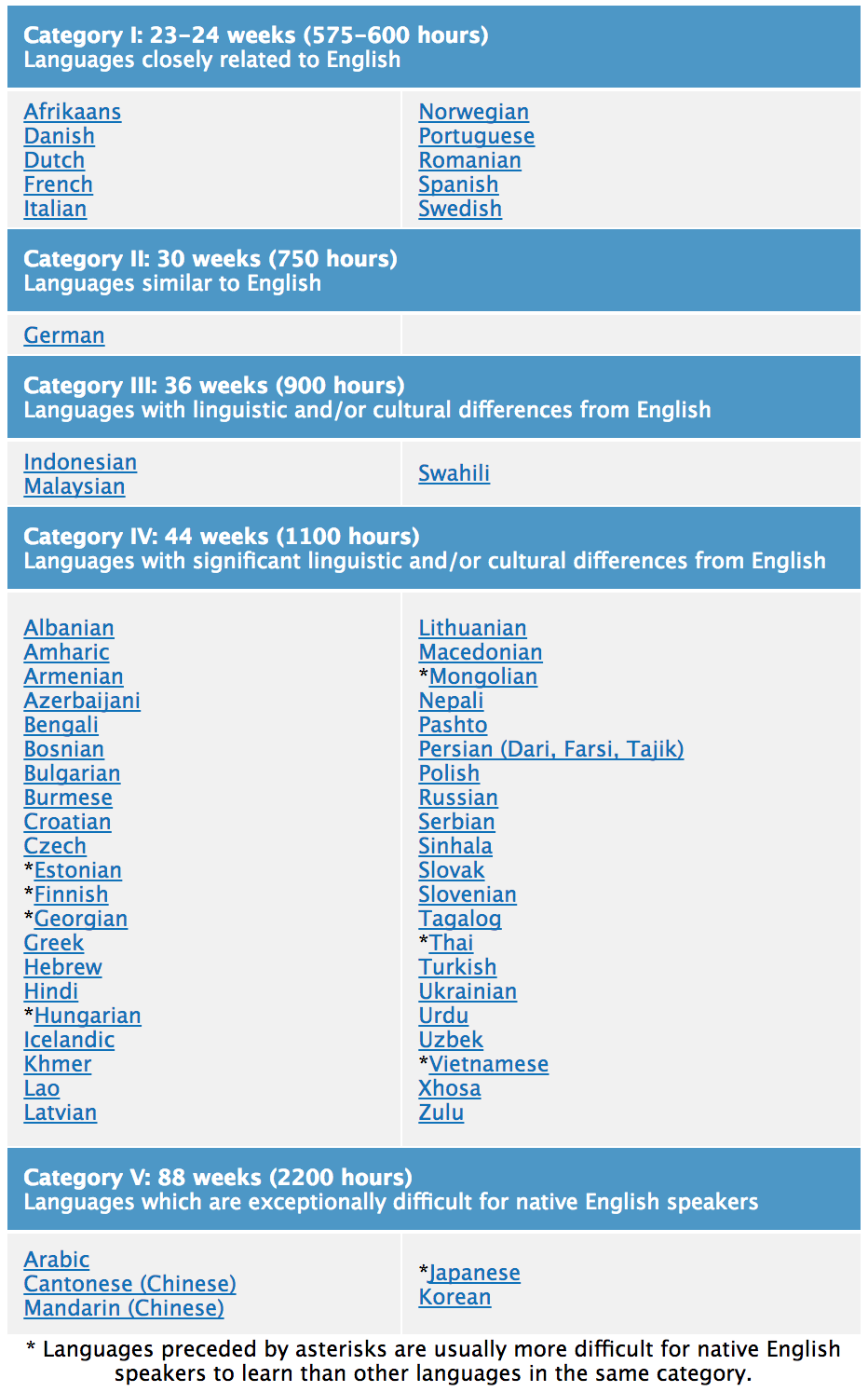
For English speakers, Spanish, French, and Dutch often fall into Category I, taking around 24 weeks to reach professional proficiency. Meanwhile, languages like Arabic, Japanese, or Korean can take up to 88 weeks — almost four times as long.
So yes, statistically speaking, some languages are “easier” for English speakers.
But that little detail — for English speakers — makes all the difference.
Your native language changes everything
If your mother tongue is Portuguese, learning Spanish can feel like chatting with a cousin — you recognize patterns, grammar, and even entire words.
But for someone from Japan, Spanish can feel like a maze of unfamiliar sounds and sentence structures.
That’s why the question “Which language is easiest?” doesn’t have a universal answer.
It completely depends on what languages you already speak — and how close they are to the one you’re learning next.
When I once compared my own progress in Spanish versus German, I realized something interesting:
even with very limited studying, I could understand enough German to be around A2 level — simply because of the overlap with English and Dutch.
That wasn’t talent. It was linguistic proximity.
A better question to ask
Instead of asking “Which language is easiest?”, try:
“Which language is easiest for me to learn right now?”
If you’re looking for an actionable way to decide, start by exploring languages that share roots with your native one.
Romance languages (Spanish, Italian, Portuguese, French, Romanian) borrow from each other extensively — grammar, vocabulary, and rhythm.
Germanic languages (English, German, Dutch, Swedish) do the same.
You’ll learn faster not because the language is easy — but because it’s familiar.
How Ellie approaches this
This is exactly why Ellie doesn’t teach languages in a one-size-fits-all way.
When you tell Ellie which languages you already speak, it actually adapts its grammar explanations and examples to your linguistic background.
A Dutch learner will get a different comparison than an Italian one.
Because your “easy” is unique.
📘 Ready to start? Download your free Ellie workbook for the language you want to learn.
If you want to create your own workbook, you can also use our workbook builder. You can use it for free.
A thought to leave you with
There’s no universal answer to *which language is easiest to learn.*For some, Spanish is a warm breeze; for others, it’s a storm of new grammar.
What matters isn’t how fast you climb, but which mountain inspires you enough to keep going.
So — if you could start learning a new language today, which one would you choose?****
Related Articles

Before You Board: 3 Language Tips for Your Next Trip to Europe
A quick checklist for travelers heading to Italy, France, or Spain — because a few words can make every encounter warmer.

Is Having an Accent Bad? Why You Should Rethink That Question
One said, “I hate my accent. I’m thinking of taking a course to get rid of it.”